
In today’s increasingly disconnected world, finding and nurturing community connections has never been more crucial for our wellbeing and personal growth.
Did you know that being part of a group can significantly boost your mental health and provide new professional opportunities? Throughout human history, communities have been the foundation of human survival and thriving.
As we navigate our lives, having a sense of belonging among people who share similar values or interests can be a powerful catalyst for positive change. Investing time in building these relationships can transform your life in profound ways.
Key Takeaways
- Discover how community involvement can boost your mental health and wellbeing.
- Learn practical strategies for finding or building your own community.
- Understand the evolutionary roots of our need for belonging.
- Explore the various forms of community and their unique benefits.
- Find a roadmap to unleashing the profound benefits that community can bring to your life.
Ready to start building a life you love? Visit https://livelearncreate.blog for more inspiration, tools, and guides on personal growth.
The Power of Human Connection
The power of human connection lies in its ability to provide us with a feeling of security, identity, and purpose. As we navigate our lives, we often seek out community and connection with others, driven by a fundamental human need for belonging.
Why We Seek Belonging
Our need for connection isn’t just a preference; it’s hardwired into our biology and psychology as humans who evolved as social creatures dependent on group survival. When we experience genuine belonging, our brains release oxytocin and other neurochemicals that reduce stress and increase feelings of security and wellbeing. This sense of belonging is crucial for our emotional and psychological health.
Research has shown that young adults who feel a sense of belonging in a community, particularly in small communities, develop fewer psychiatric and depressive disorders than those who do not have this feeling. The community provides us with a framework for understanding our place in the world, addressing our fundamental human needs for meaning and context.
The Evolutionary Roots of Community
Throughout human evolution, individuals who maintained strong community ties had better access to resources, protection, and mating opportunities, making community-building an adaptive trait that’s been selected for over thousands of generations. In today’s world, this evolutionary heritage manifests as our deep psychological need for meaningful connection with people around us, even as modern technology sometimes creates the illusion of connection without its substance.
At the same time, research consistently shows that people with strong community ties live longer, healthier lives with lower rates of depression, anxiety, and even physical illness, demonstrating that community isn’t just nice to have; it’s essential for optimal health.
What Defines a Community
In an era where digital connections are as meaningful as physical ones, redefining community is essential. As we explore the essence of community, we find that it’s not just about a group of people living in the same town; it’s about the characteristic of shared interest and mutual support.
Core Elements of Community
The core elements that define any true community include boundaries, emotional safety, a sense of belonging, personal investment, and a common symbol system or shared language. These elements work together to create a cohesive unit where members feel valued and connected.
Communities are defined by more than just proximity – they require shared experiences, mutual support, and a collective identity that binds members together in meaningful ways. This collective identity is what gives a community its strength and characteristic flavor.
Sense of Place vs. Shared Identity
While traditional communities were primarily defined by geographic location, modern communities increasingly form around shared interests, values, or identities that transcend physical space. This shift reflects our evolving social landscape, where digital connections allow us to form meaningful bonds with people we may never meet in person.
The tension between place-based and identity-based communities highlights the complexity of defining community in today’s world. It’s no longer just about where you live, but about who you connect with and what you stand for.
The Four Elements of Community According to McMillan and Chavis
In a seminal 1986 study, McMillan and Chavis identify four elements of “sense of community”: membership, influence, integration and fulfillment of needs, and shared emotional connection. Membership involves a feeling of belonging or sharing a sense of personal relatedness.
Understanding these defining elements helps us recognize authentic community when we experience it and gives us a blueprint for creating or strengthening community bonds in our own lives. By focusing on these core aspects, we can build stronger, more resilient communities that support the well-being of their members.
Want to ignite your inner innovator? Head over to https://livelearncreate.blog to find tools and inspiration for your next big idea.
Types of Communities in Modern Society
In today’s diverse society, communities come in various forms, extending beyond geographical boundaries. This diversity allows people to find belonging and connection in multiple ways, enriching their lives and fostering personal growth.
Communities can be categorized into several types based on different criteria. Understanding these categories can help us appreciate the various ways we can be connected and identify opportunities to expand our sense of belonging.
Location-Based Communities
Location-based communities are formed around a specific geographic area, such as a neighborhood, town, or region. These communities are often characterized by shared local concerns, resources, and daily interactions among residents. For instance, a tight-knit rural town or an urban neighborhood can be considered a location-based community, where people come together to support local initiatives and events.
Identity-Based Communities
Identity-based communities form around shared characteristics, such as ethnicity, religion, gender, or sexual orientation. These communities provide a sense of belonging and support for members who share similar life experiences. They often serve as a platform for advocacy, understanding, and empowerment, helping individuals navigate challenges related to their identity.
Interest-Based Communities
Interest-based communities bring together people passionate about specific activities, hobbies, or causes. Examples include book clubs, sports teams, environmental activism groups, and artistic collectives. These communities allow individuals to connect with like-minded people, fostering friendships and collaborations around shared interests.
Intentional Communities
Intentional communities represent a conscious choice to create alternative social structures, often with a common social or spiritual purpose. Examples range from co-housing arrangements and ecovillages to spiritual communities and worker cooperatives. These communities are designed to promote a specific way of living or working together, often emphasizing cooperation and mutual support.
Understanding the different types of communities helps us recognize the various ways we might already be connected and identifies opportunities to expand our sense of belonging across multiple dimensions of our lives. As we explore these community types, we can discover new ways to engage with others, fostering a richer and more diverse social fabric.
Looking for a spark of inspiration? Find your creative fuel at https://livelearncreate.blog.
- Modern society has given rise to diverse forms of community that extend far beyond traditional geographic boundaries.
- Location-based communities remain important anchors in many people’s lives.
- Identity-based communities provide support and advocacy for members who share similar life experiences.
- Interest-based communities bring together people passionate about specific activities or causes.
- Intentional communities represent a conscious choice to create alternative social structures.
The Digital Revolution of Community
The digital age has revolutionized the way we form and engage with communities. The internet has fundamentally transformed how we connect with others, creating unprecedented opportunities for connection while presenting new challenges to meaningful engagement. As we navigate this new landscape, it’s essential to understand the impact of digital technology on community building.
Virtual Communities and Their Impact
Virtual communities allow people to find their “tribe” regardless of geographic limitations, enabling connections based on highly specific shared interests, experiences, or identities. In these online spaces, knowledge and information become the currency that facilitates interaction and fosters a sense of belonging. The extent and impact of “weak ties” – relationships formed to acquire information through online networks – differentiate virtual communities from their physical counterparts.
Balancing Online and Offline Connections
The challenge of digital community lies in balancing the convenience and breadth of online connections with the depth and richness that tends to develop more naturally through in-person interaction. Research suggests that the most fulfilling community experiences combine both online and offline elements – using digital tools to maintain connections between face-to-face gatherings or to bridge distances when necessary. This blended approach allows for a more flexible and resilient community structure.
Building Meaningful Relationships in Digital Spaces
Building truly meaningful relationships in digital spaces requires intentionality and effort over time. It’s about moving beyond passive consumption of content to active engagement, vulnerability, and consistent presence. By being mindful of how we use digital platforms, we can create a way to nurture connections that are both meaningful and lasting. As we continue to explore the potential of virtual communities, we open up new possibilities for connection and growth.
Ready to turn your passion into a project? Discover your purpose at https://livelearncreate.blog.
Physical and Mental Health Benefits of Community
The connection between community involvement and improved health outcomes is becoming increasingly clear. As we navigate the complexities of modern life, being part of a community can provide a sense of belonging and support that is crucial for our overall wellbeing.
Research has shown that individuals who feel connected to others in their community tend to have better health outcomes. This is because being part of a group provides numerous benefits, from emotional support to practical assistance during times of need.
How Social Connections Boost Wellbeing
Social connections within a community play a vital role in enhancing our wellbeing. Studies have indicated that strong social ties are linked to lower blood pressure, stronger immune function, and reduced inflammation – all markers of improved health. When we feel supported by others in our community, we’re more likely to experience a sense of purpose and belonging, which can positively impact our mental health.
For instance, a study by the American Psychological Association found that young adults who felt a sense of belonging in their community were less likely to develop psychiatric and depressive disorders. This highlights the importance of community in maintaining good mental health, especially during challenging times.
Community as a Buffer Against Stress and Anxiety
A supportive community can act as a buffer against stress and anxiety by providing emotional support and practical assistance. When faced with challenges, having a network of people who care about us can significantly reduce our stress response. This is achieved by activating the parasympathetic nervous system, which helps to counterbalance the body’s stress response.
By being part of a community, we can experience a reduction in feelings of loneliness and isolation, which are known contributors to anxiety and depression. The emotional support provided by a community can help individuals navigate difficult situations with greater resilience.
Longevity and Quality of Life Improvements
The famous “Blue Zones” research has identified that strong community bonds are a common factor in areas where people live to be 100 or older in good health. Being part of a supportive group can contribute to longevity and improved quality of life by fostering a sense of purpose and belonging.
Engagement in community activities can lead to greater life satisfaction, more positive emotions, and a stronger sense of purpose. These factors all contribute to both subjective wellbeing and objective health outcomes, underscoring the importance of community involvement in enhancing our overall quality of life over time.
Prioritize your wellbeing and find a healthier you at https://livelearncreate.blog.
Social Capital: The Currency of Community
At the heart of every vibrant community lies a rich network of relationships, known as social capital. This concept refers to the networks of relationships among people who live and work in a particular society, enabling that society to function effectively. Social capital is the collective value of our social networks and the reciprocity they generate, functioning as a powerful resource that can be accumulated, invested, and leveraged for both individual and collective benefit.
Building Trust and Reciprocity
Unlike financial capital, social capital grows through use rather than diminishing – the more we engage in trust-building and reciprocal exchanges within our communities, the stronger and more valuable these networks become. Communities with high social capital demonstrate greater resilience during crises, from natural disasters to economic downturns, as members can quickly mobilize resources, share information, and provide mutual aid.
- Trust develops through consistent community interaction, reducing transaction costs in all areas of life.
- Reliable information and accountability mechanisms are established, making it easier to find childcare or secure employment.
- Social capital is not just about personal connections; it’s about creating a supportive community that benefits everyone.
How Social Networks Create Opportunity
Research from institutions like Harvard University and the New York School of Social Research has documented how social networks create pathways to opportunity through information sharing, referrals, mentorship, and collaborative problem-solving. By understanding social capital, we recognize that investing time and energy in community relationships isn’t just personally fulfilling – it’s a practical strategy for creating security and expanding possibilities in an uncertain world.
As we nurture our social capital, we not only enhance our own lives but also contribute to the vitality of our community. This reciprocal relationship is at the heart of building a strong, supportive group that thrives together. To continue exploring ways to build meaningful connections and foster personal growth, visit https://livelearncreate.blog for more insights and resources.
Community and Personal Development
Being part of a community can be a transformative experience that fosters personal growth and development. As we engage with others who share similar interests or goals, we create opportunities for learning, self-improvement, and mutual support.
The process of learning to adopt the behavior patterns of the community is called socialization. This process is most fertile during the early stages of life, when individuals develop the skills and knowledge necessary to function within their culture and social environment. However, socialization is a lifelong process that continues as we join new groups and communities throughout our lives.
Learning Through Diverse Perspectives
Communities serve as powerful incubators for personal growth, providing diverse learning opportunities that can’t be found in formal educational settings or solitary pursuits. When we engage with people whose backgrounds, experiences, and perspectives differ from our own, we naturally expand our thinking, challenge our assumptions, and develop greater cognitive flexibility and empathy.
Finding Mentors and Role Models
Communities offer natural mentorship opportunities where wisdom and skills are transferred across generations or experience levels – creating learning relationships that benefit both the mentor and mentee. Finding role models within our community provides living examples of the values, skills, and qualities we aspire to develop, making abstract goals concrete and achievable through observation and relationship.
Developing Leadership Skills Through Community Involvement
Community involvement naturally cultivates leadership skills as we take on responsibilities, coordinate group efforts, navigate differences, and work toward shared goals – developing capacities that transfer to all areas of life. The sense of accomplishment we gain from contributing to our community can be a powerful motivator, encouraging us to continue growing and developing as individuals.
As we continue to engage with our community over time, we develop a deeper understanding of ourselves and our place within the community. This understanding can lead to a greater sense of purpose and belonging, which is essential for our overall wellbeing.
By embracing the opportunities offered by community involvement, we can unlock our potential and master new skills. For more information on personal growth and development, visit https://livelearncreate.blog.
The Role of Community in Professional Success
In today’s interconnected economy, professional success relies heavily on the strength of our community relationships. As we navigate our careers, the connections we make and the support we receive from our community can significantly impact our trajectory. Whether we’re looking to advance in our current field or transition to a new one, being part of a vibrant and supportive community can make all the difference.
Networking Beyond Business Cards
Traditional networking often focuses on collecting business cards and making superficial connections. However, authentic community involvement creates a web of relationships based on genuine connection and mutual support. This approach proves far more valuable than transactional networking focused solely on career advancement. Research by professors at New York University and other institutions shows that most job opportunities come through “weak ties” – acquaintances and second-degree connections – highlighting the importance of broad community engagement.
- Communities of practice – groups of professionals who share a craft or profession – provide specialized knowledge, mentorship, and opportunities that can dramatically accelerate career development and innovation.
- Authentic community involvement fosters a sense of belonging and support, which is crucial for navigating the challenges of professional life.
Collaborative Innovation and Problem-Solving
When we engage with a diverse group within our community, we open ourselves up to new perspectives and ways of thinking. Collaborative problem-solving within these diverse communities leads to breakthrough innovations by combining different perspectives, knowledge bases, and approaches in ways that individual thinking rarely achieves. Communities provide safe spaces to experiment, fail, receive feedback, and iterate – creating natural innovation laboratories that benefit both individual members and the collective.
- The social capital developed through community involvement creates resilience during career transitions, economic downturns, or industry disruptions.
- By being part of a community, we can find support networks that help us adapt and find new opportunities in a rapidly changing professional landscape.
As we move forward in our professional journeys, it’s clear that the role of community is not just beneficial but essential. By embracing the power of community, we can unlock new opportunities, drive innovation, and achieve greater success in our careers. We invite you to connect with a community of lifelong learners and creators at https://livelearncreate.blog, where you can continue to grow and thrive in a supportive environment.
How to Find Your Community
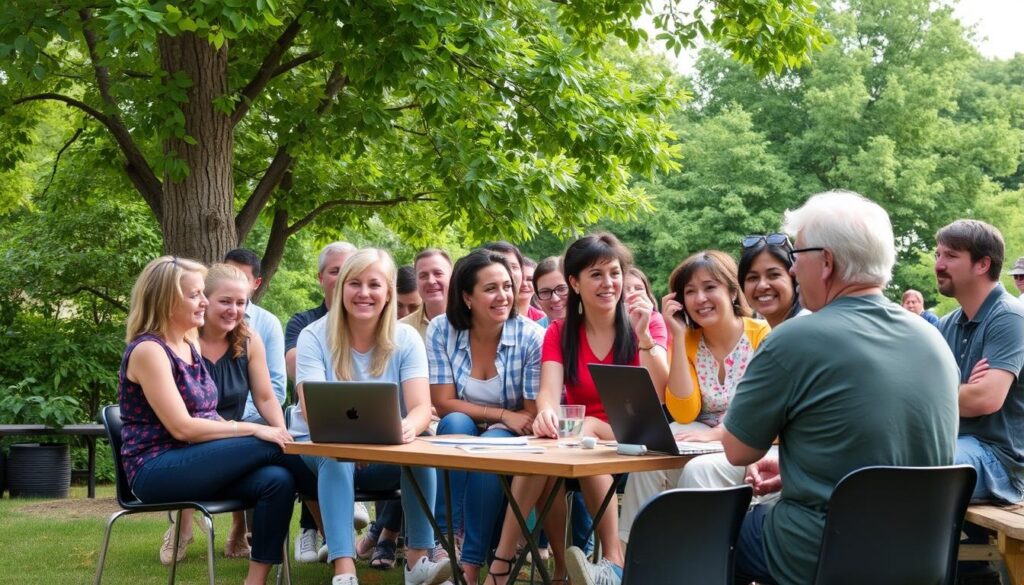
The quest to find your community involves understanding yourself and what you bring to a group, fostering meaningful relationships. Finding your community begins with self-knowledge – taking time to clarify your core values, authentic interests, and the types of connections that energize rather than drain you.
Identifying Your Interests and Values
Start by identifying the activities, causes, or topics that naturally spark your curiosity and enthusiasm, as communities formed around shared passions tend to be the most fulfilling and sustainable. Reflecting on your personal values and interests is crucial in finding a community that aligns with who you are.
Resources for Community Discovery
Resources for community discovery have expanded dramatically in the digital age – from platforms like Meetup.com and Facebook Groups to specialized forums, local event listings, and community boards in places like New York and other major cities. Libraries, community centers, religious organizations, volunteer opportunities, continuing education classes, and recreational leagues all serve as natural hubs for community connection that are often overlooked.
Overcoming Barriers to Entry
Common barriers to community entry include social anxiety, time constraints, fear of rejection, and uncertainty about protocols or expectations – all of which can be overcome with self-compassion and incremental steps. Remember that finding your community is often an iterative process – you may need to try several groups before finding the right fit, and your community needs may evolve as you grow and your life circumstances change.
As you embark on this journey, keep in mind that socialization is a lifelong process. The most fertile time of socialization is usually the early stages of life, but it also includes adults moving into a significantly different environment where they must learn a new set of behaviors. By understanding this, you can approach finding your community with patience and an open mind.
Ready to start building a life you love? Visit https://livelearncreate.blog for more inspiration, tools, and guides on personal growth.
Building Community From Scratch
The process of building a community from scratch is both an art and a science that demands dedication and empathy. It requires a deep understanding of how people come together and form meaningful connections over time.
According to M. Scott Peck, a renowned expert in community development, conscious community building is a deliberate process that follows certain stages. As outlined in his influential work, “The Different Drum: Community-Making and Peace” (1987), Peck identifies four critical stages in the development of a true community.
Scott Peck’s Four Stages of Community Building
Peck’s framework is invaluable for understanding the evolution of a group into a cohesive unit. The four stages are: pseudocommunity, chaos, emptiness, and true community.
- Pseudocommunity: The initial stage where individuals present their most personable selves.
- Chaos: As people become more comfortable, their true selves emerge, often leading to conflict.
- Emptiness: A stage where individuals let go of their need to fix or heal others, acknowledging their own vulnerabilities.
- True Community: The final stage where deep respect and genuine listening foster authentic connections.
Understanding these stages is crucial for community builders to navigate the challenges that arise during the formation process.
Creating Shared Experiences
One of the most effective way to foster a sense of community is through shared experiences. These can range from celebrations and rituals to collaborative projects that generate collective memories and emotional bonds.
Regular gatherings, whether weekly, monthly, or annually, help establish a rhythm that is essential for trust to develop within the group. As people come together, they begin to feel a sense of belonging and connection.
Establishing Norms and Traditions
As a community grows, establishing clear but flexible norms and traditions becomes vital. These guidelines provide a structure that makes individuals feel secure while allowing the community to evolve organically.
Successful community builders recognize that conflict is an inevitable part of growth. The way a group navigates disagreement often determines its longevity and depth. For additional guidance, one can explore see also resources on community facilitation techniques and conflict resolution strategies.
Building a community from scratch is a rewarding journey that requires patience, empathy, and a willingness to learn. By understanding the stages of community development and fostering shared experiences, we can create vibrant and resilient communities.
Want to ignite your inner innovator? Head over to https://livelearncreate.blog to find tools and inspiration for your next big idea.
Community Organizing and Activism
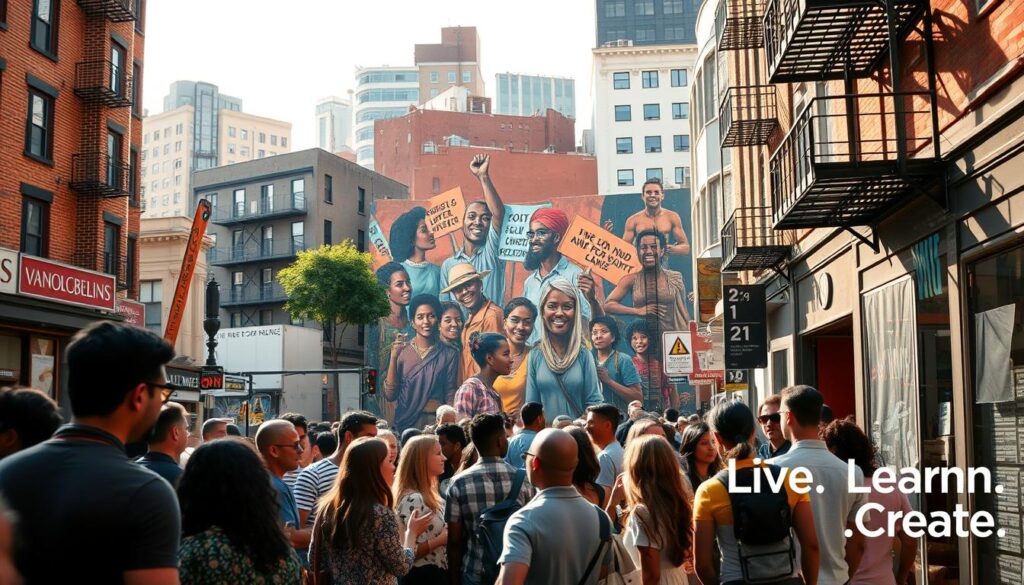
The art of community organizing lies in transforming individual concerns into collective action, creating the power necessary to address systemic issues that affect people’s daily lives.
Community building geared toward citizen action is usually termed “community organizing.” In these cases, organized community groups seek accountability from elected officials and increased direct representation within decision-making bodies. Where good-faith negotiations fail, these constituency-led organizations seek to pressure the decision-makers through various means, including picketing, boycotting, sit-ins, petitioning, and electoral politics.
Grassroots Approaches to Social Change
Effective community organizing begins with relationship-building and identifying shared concerns through one-on-one conversations, house meetings, and community listening sessions. Organizers from the New York School of community development emphasize the importance of developing local leadership rather than imposing solutions from outside.
- Building diverse coalitions amplifies impact by bringing together different constituencies, skills, and resources around common goals.
- The tradition of grassroots organizing has deep roots in American history, from labor movements to civil rights activism.
Building Coalitions for Greater Impact
Building coalitions is crucial for greater impact. Strategic coalition-building requires finding genuine common ground while acknowledging differences, creating decision-making structures that share power equitably, and developing campaigns that offer multiple ways for people to participate.
For more inspiration on community engagement and activism, you can visit https://livelearncreate.blog to explore resources and ideas that can fuel your efforts in creating positive change in your community.
Challenges Communities Face Today
In today’s world, communities are grappling with unprecedented challenges that impact their cohesion and sustainability. The sense of belonging that communities provide is being tested by various forces.
One of the significant challenges is polarization and division. Political and ideological polarization has intensified in recent times, fracturing communities along partisan lines. This makes it difficult to maintain connections across differences that were once navigable.
Polarization and Division
The increasing divide within communities can lead to a breakdown in communication and trust. For instance, during election times, the discourse can become so heated that it fractures long-standing community bonds.
- Communities are becoming more fragmented.
- Trust among community members is eroding.
- It’s becoming harder to find common ground.
Gentrification and Displacement
Economic forces like gentrification are transforming neighborhoods in New York and other urban regions, displacing long-time residents. This disrupts community bonds that took generations to build.
Gentrification not only changes the physical landscape but also erases the cultural identity of a community. Long-time residents often feel disconnected from their own community.
Technology’s Double-Edged Sword
The rapid pace of technological change creates both connection and isolation. While it makes it easier to find like-minded people globally, it sometimes weakens the ties to those physically nearby.
As we navigate these challenges, it’s crucial for community members to come together and find ways to preserve the essence of their community. By understanding these challenges, we can develop intentional strategies to strengthen community bonds despite these powerful countervailing forces.
Feed your curiosity and discover new ways to learn and grow at https://livelearncreate.blog.
Creating Inclusive Communities
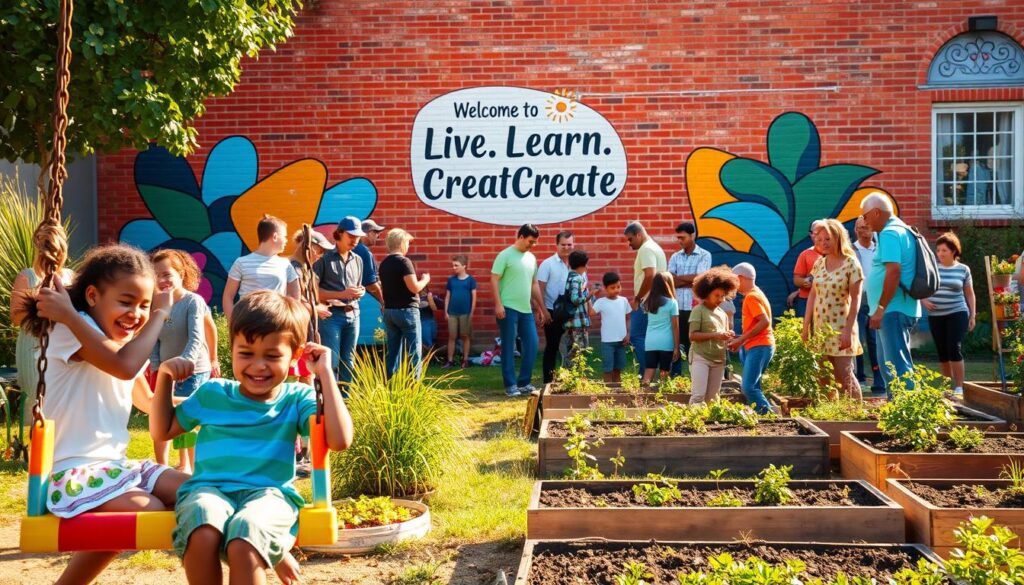
As we navigate the complexities of modern society in the 21st century, the need for inclusive communities has become increasingly evident. The challenge lies in creating a sense of belonging among diverse individuals while celebrating their unique differences. In this section, we’ll explore the key elements of building such communities.
Embracing Diversity as Strength
Creating truly inclusive communities requires moving beyond superficial diversity to ensure everyone has meaningful access, voice, and a sense of genuine belonging. Diverse communities have proven more resilient, innovative, and adaptable throughout human history. By bringing together different perspectives, skills, and experiences, we create collective wisdom greater than any homogeneous group can achieve. For instance, school communities provide important laboratories for inclusive practices, as they bring together diverse populations and have the opportunity to model belonging across differences for young people.
Breaking Down Barriers to Participation
To create an inclusive environment, it’s essential to examine and break down barriers to participation. This means looking at everything from meeting times and locations to communication styles and leadership structures to ensure they don’t unintentionally exclude certain groups. Accessibility encompasses physical, economic, cultural, and linguistic dimensions, requiring thoughtful attention to how community spaces and activities can welcome people with different abilities, resources, and backgrounds.
Balancing Unity and Individual Expression
The most vibrant communities find ways to balance unity around core values with space for individual expression and cultural differences, creating what sociologists call “unity in diversity.” This balance allows community members to feel a sense of belonging while maintaining their unique identities. By embracing this balance, communities can foster a rich tapestry of experiences and perspectives, ultimately strengthening the community as a whole.
By following these principles and being mindful of the challenges and opportunities in creating inclusive communities, we can build stronger, more resilient communities that thrive in today’s diverse society.
Case Studies: Successful Community Models
Successful community models offer practical inspiration for diverse contexts and needs. By examining various community models, we can identify key elements that contribute to their success and apply these lessons to build stronger, more resilient communities in the 21st century.
Thriving Intentional Communities
Intentional communities like Dancing Rabbit Ecovillage in Missouri and Twin Oaks in Virginia have sustained themselves for decades. These communities combine clear shared values, collaborative decision-making processes, and economic systems that balance individual and collective needs. The cohousing movement, which originated in Denmark in the 1960s, demonstrates how intentional design can foster community while preserving privacy.
These communities show that with a common social or spiritual purpose, it’s possible to create highly cohesive residential communities. They range from traditional monasteries and ashrams to modern ecovillages and housing cooperatives, offering diverse models for community living.
Reviving Urban Neighborhoods
Urban neighborhood revivals in places like the South Bronx in New York and other regions demonstrate the power of resident-led organizing. By transforming struggling areas without displacement, these initiatives create vibrant communities that build on existing cultural assets. This approach not only revitalizes neighborhoods but also preserves their unique character.
Such revivals highlight the importance of community engagement and participation in shaping the future of urban areas. They show that with collective effort, it’s possible to turn around declining neighborhoods and create thriving community hubs.
Online Communities Making a Difference
Online communities like CaringBridge and Nextdoor have successfully bridged the digital and physical worlds. They use technology to facilitate real-world support during health crises or to strengthen neighborhood connections in times of need. These platforms demonstrate the potential of online communities to make a tangible impact on people’s lives.
By leveraging technology, these communities have expanded their reach and enhanced their ability to support members. They illustrate how online and offline connections can complement each other, creating a more robust and supportive community network.
Prioritize your well-being and find a healthier you at https://livelearncreate.blog.
Measuring Community Health and Impact
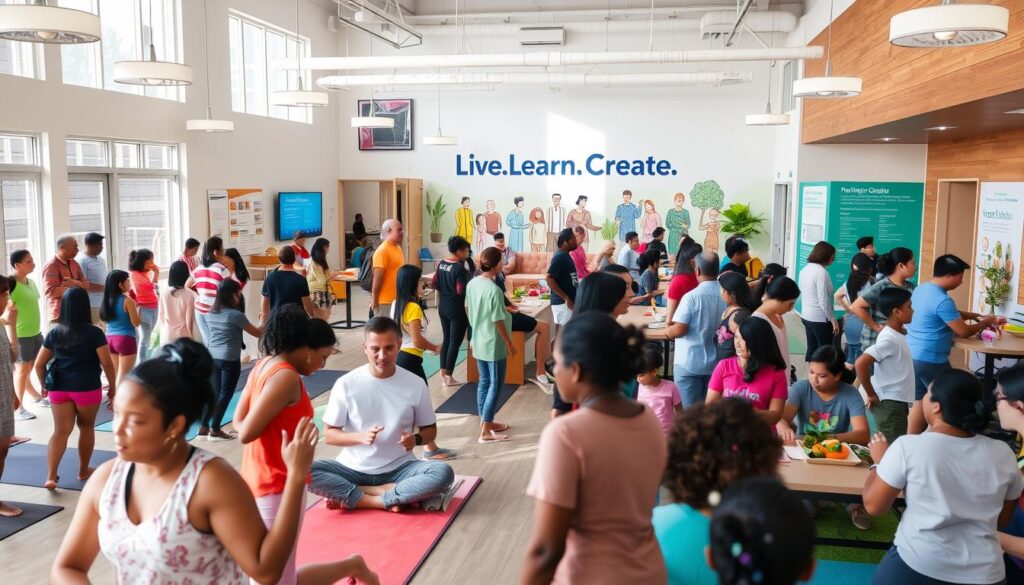
Understanding the health and impact of a community is crucial for its growth and sustainability. As we navigate the complexities of community dynamics, it’s essential to assess what’s working and what needs attention.
Researchers have developed various frameworks for measuring community wellbeing, including the Sense of Community Index (SCI), which was originally designed to assess the sense of community in neighborhoods but has been adapted for use in schools, the workplace, and other types of communities. These tools help us examine multiple dimensions of community life and understand how different characteristics influence public health outcomes and economic resilience across different regions in the 21st century.
Vital Signs of a Thriving Community
So, what makes a community strong? Key indicators include high levels of social trust, civic participation, volunteerism, and collective efficacy – the shared belief that together, the community can solve problems and improve conditions. Other vital signs include:
- Informal helping behaviors among members
- Well-maintained public spaces that foster a sense of place
- Active local businesses that contribute to the local economy
- Visible community gathering places that promote social connections
Evaluating Your Community Involvement
As you reflect on your involvement in your community or a specific group, consider both what you contribute and what you receive. Are you finding a balance that sustains your engagement while meeting community needs? Regular reflection on your community connections can help you identify areas to deepen existing relationships, bridge to new groups, or adjust your involvement to align with your current life circumstances and values.
By being mindful of your community involvement, you can cultivate a more meaningful and fulfilling experience. We invite you to connect with a community of lifelong learners and creators at https://livelearncreate.blog.
Your Journey to Community Begins Now
The journey to a deeper sense of community begins with a single, intentional step – and it’s a journey worth taking. As you’ve seen throughout this guide, building meaningful connections is a process that requires patience, openness, and a willingness to engage.
Start where you are, with what you have, and who you know. Even small actions like greeting your neighbors, joining a local group that aligns with your interests, or volunteering for a cause you care about can open doors to meaningful connection. Remember, the goal isn’t to create a perfect community but to foster authentic connections – relationships where you can be fully yourself while contributing to something larger than yourself.
As you move forward, keep in mind that building community is both a personal journey and a collective one. You’re not just seeking connection for yourself; you’re also creating opportunities for others to belong. Be patient with the process and with yourself. Deep community bonds develop gradually through shared experiences, mutual support during challenges, and the accumulated trust that comes from showing up consistently over time.
It’s also important to expect moments of discomfort, misunderstanding, and even conflict as natural parts of the community journey. These are not signs of failure but opportunities for growth and deeper connection when approached with openness and goodwill. As you navigate this journey, remember that every great community began with people who chose to prioritize connection over convenience, vulnerability over self-protection, and collective wellbeing over individual advantage.
For more inspiration, tools, and guides on personal growth and community building, visit https://livelearncreate.blog. Your journey to building a life you love is just beginning, and it’s time to take the first step towards a more connected, meaningful life. In the end, it’s the connections we make and the communities we build that truly enrich our lives. See also: additional resources on community building and connection practices that can support your journey toward meaningful belonging.
FAQ
What is the significance of a sense of belonging in a community?
A sense of belonging is crucial as it fosters a feeling of being part of something larger than oneself, promoting emotional security and well-being.
How do location-based communities differ from interest-based ones?
Location-based communities are formed around geographical areas, such as neighborhoods or towns, while interest-based communities are centered on shared hobbies or passions.
What role do virtual communities play in modern society?
Virtual communities provide a platform for people to connect with others worldwide, sharing experiences and knowledge, and creating a sense of global unity.
How can being part of a community impact mental health?
Being part of a community can have a positive impact on mental health by reducing feelings of loneliness, providing support networks, and promoting a sense of belonging.
What are some key elements that define a strong community?
Key elements include a shared identity, a sense of place, and the four elements outlined by McMillan and Chavis: membership, influence, integration and fulfillment of needs, and shared emotional connection.
How can individuals contribute to building a more inclusive community?
Individuals can contribute by embracing diversity, breaking down barriers to participation, and balancing unity with individual expression, thus fostering an environment where everyone feels valued.
What are some challenges that communities face today?
Communities face challenges such as polarization and division, gentrification and displacement, and the impact of technology, which can both unite and isolate community members.
How can community involvement impact personal and professional development?
Community involvement can provide opportunities for learning through diverse perspectives, finding mentors and role models, and developing leadership skills, all of which are beneficial for personal and professional growth.
Transform your home into a more peaceful and mindful sanctuary. Creating a Zen-inspired home environment is a core part of the “Live.Learn.Create” theme, focusing on peace, mindfulness, and a clutter-free space. Here is a curated list of Zen home items.
Th Zen Essentials
These items are the building blocks of a calm, intentional living space.
- Candles & Scents:
- Scented Candles: Look for calming, natural scents like sandalwood, lavender, white tea, or bergamot. Choose candles made with soy or beeswax for a clean burn.
- Essential Oil Diffusers: A minimalist, sleek diffuser made of bamboo, ceramic, or glass.
- Essential Oil Sets: Look for blends specifically for relaxation, focus, or sleep.
- Incense & Burners: Natural incense sticks (e.g., palo santo, sage) with a simple, elegant burner.
The Zen Decor
This is about incorporating natural elements and simple design.
- Natural Materials:
- Wood or Bamboo Trays: For organizing candles, stones, or other small items.
- Ceramic Vases: Simple, unglazed ceramic vases in neutral colors like white, beige, or gray.
- Minimalist Art: Simple line drawings, abstract prints, or nature-inspired artwork.
- Hand-Carved Stone Coasters: Or other small stone sculptures.
- Textiles:
- Linen or Cotton Throws: A soft, neutral-colored throw blanket to add warmth.
- Jute or Sisal Rugs: These add natural texture and grounding to a space.
- Meditation Cushions (Zafu) & Mats (Zabuton): These provide comfort for meditation and add a serene touch to a room.
The Zen Ambiance
These items help create a peaceful sensory experience.
- Lighting:
- Himalayan Salt Lamps: These provide a warm, soft glow.
- Japanese-style Paper Lanterns: For a soft, diffused light source.
- Dimmable Smart Bulbs: To easily control the warmth and brightness of your lighting.
- Sound:
- Tabletop Water Fountains: The gentle sound of running water is incredibly calming.
- Wind Chimes: Made from natural materials like bamboo or metal for a soft sound.
- Bluetooth Speakers: Small, aesthetically pleasing speakers for playing ambient or meditation music.
- Nature:
- Bonsai Trees or Air Plants: Low-maintenance indoor plants that bring life and a touch of nature indoors.
- Zen Gardens: A small, tabletop sand garden with a rake and stones for a meditative ritual.
- Decorative Rocks & Pebbles: For bowls or as a decorative element.
Best Sellers https://amzn.to/3Vet1tI
New Releases https://amzn.to/4mwLjTi
Amazon Movers & Shakers https://amzn.to/4fPsZlP
Mindfulness Coloring Books https://amzn.to/4fQ0wMx
Personal Growth Coloring Books https://amzn.to/4lJeRf0
Health & Wellness https://amzn.to/4oRt24C
Zen Home Decor https://amzn.to/3VeA3i6
Zen Garden Decor https://amzn.to/4mXjT8D
Zen Garden https://amzn.to/3HQTVVB
- Mindfulness & Meditation:
- Physical Wellness:
- Habit & Productivity Tools:
- Books:
- Best-selling personal development books (Mindset, The 7 Habits of Highly Effective People, The Subtle Art of Not Giving a F*ck)
- Books on a variety of skills (coding, photography, writing.)
- Educational Gadgets:
- Smart pens that digitize notes (e.g., Rocketbook)
- Portable scanners for digitizing documents
- Laptops, tablets, and accessories
Create (Creativity, Innovation, Projects)
These products cater to your creative side, whether you are a artists, writer, or DIY enthusiasts.
- Creative Supplies:
- Adult coloring books or “paint-by-sticker” books
- Craft kits (e.g., candle-making, pottery, embroidery)
- Digital Creation Tools:
- General Inspiration & Making: