

“You don’t have to be great to start, but you have to start to be great.” – Zig Ziglar. This quote shows the power of building daily routines through habit stacking. It’s about making your life more streamlined and productive.
Habit stacking is about adding new habits to ones you already have. It creates a chain of positive routines that can change your life. As you start, you’ll see how to use habit stacking to reach your goals.
With the right tools and resources, like those on Amazon.com, you can start a lasting change in your daily routine.
Key Takeaways
- Understand the psychology behind habit stacking and its role in building effortless routines.
- Learn how to leverage existing habits to build new ones.
- Discover tools and resources available to support your personal transformation.
- Develop a more streamlined and productive daily life.
- Achieve your goals through the power of habit stacking.
Understanding Daily Habits & Routines
Learning about daily habits and routines can change your life for the better. It helps you make choices that lead to a more balanced and happy life.
What Are Daily Habits?
Daily habits are actions we do every day, often without thinking. They can be simple, like brushing our teeth, or more complex, like exercising or meditating. Healthy habits are key because they boost our well-being and health.
Some good daily habits include:
- Eating a balanced diet
- Engaging in regular physical activity
- Getting enough sleep
- Practicing mindfulness or meditation
Adding these habits to our daily lives can make us more productive, happier, and less stressed.
The Importance of Routines in Everyday Life
Routines give us structure and stability. They help us do our daily tasks better, so we have more time for what’s important. Daily rituals add meaning and purpose, keeping us focused on our goals.
“You don’t have to be great to start, but you have to start to be great.” – Zig Ziglar
This quote shows starting small and being consistent is key. It helps us build a strong base for success and growth.
Keeping daily routines has many benefits, including:
- Increased productivity
- Improved time management
- Enhanced mental clarity
- Better work-life balance
The Science Behind Habit Formation
The science of habit formation shows how consistency is key in creating routines. By learning how habits form, we can make better lifestyle changes. This helps us boost our productivity.
How Habits Are Built in the Brain
Habits form through context-dependent repetition. Doing a task in the same setting over and over makes it automatic. Our brain links the setting to the task, making it easier to do it without thinking.
The basal ganglia in our brain is vital for forming habits. As we keep doing a behavior, the brain’s pathways for that behavior get stronger. This makes the behavior more automatic.

The Role of Consistency in Developing Routines
Consistency is essential for lasting habits. Doing tasks at the same time every day makes them part of our routine. This consistency helps make new habits stick, making them easier to keep up.
To get productivity tips through habit stacking, find routines to build on. Adding new habits to existing ones creates a strong system for growth and development.
Introducing Habit Stacking
Let’s dive into the world of habits and routines. We’re going to explore a powerful technique called habit stacking. It helps you build new habits on top of old ones, making your daily routine smoother and more efficient.
What Is Habit Stacking?
Habit stacking is a simple yet effective way to build new habits. It uses your existing habits as a base to add new ones. For instance, if you always make coffee in the morning, you can start meditating for 5 minutes right after.
This method works because it taps into your brain’s love for patterns. By adding a new habit to an old one, you create a new path in your brain. This makes it easier to stick to the new habit.
The Benefits of Habit Stacking for You
Habit stacking offers many benefits. It helps you create a more efficient morning routine. It also makes your evening routine calmer, preparing you for sleep.
Some key benefits include:
- Increased efficiency in your daily routine
- Improved ability to adopt new habits
- Enhanced overall well-being through healthy habits
- Reduced decision fatigue by automating tasks
By using habit stacking, you can take charge of your habits and routines. This leads to positive changes that boost your well-being.
The Psychology of Habit Stacking
Habit stacking is more than a productivity trick. It’s a way to change our daily lives. It uses the brain’s habits to help us grow and feel better.
Why Habit Stacking Works
Habit stacking taps into our brain’s love for patterns. Adding a new habit to an old one makes it easier to do. This is because of context-dependent memory, which links the old habit to the new one.
For example, if you brush your teeth every morning, you can add flossing next. Brushing becomes the cue for flossing, making it simpler to start.

The Connection Between Habits and Mindset
Our habits shape our mindset. Good habits can make us more positive and ready to face challenges. They affect how we see ourselves and our abilities.
Adding self-care like meditation or journaling to your day can improve your mood. By linking these habits to your routine, you boost your overall well-being.
| Habit | Mindset Impact | Self-Care Benefit |
|---|---|---|
| Meditation | Reduces stress and anxiety | Enhances mental clarity |
| Journaling | Promotes reflection and self-awareness | Supports emotional regulation |
| Exercise | Boosts energy and motivation | Improves physical health |
Understanding habit stacking’s psychology helps us make lasting changes. By adding self-care and daily habits, we build a stronger, more positive mindset.
Steps to Create Your Habit Stack
To start a successful habit stack, first understand your daily habits. Knowing what you do every day helps you build new, better habits on top of them.
Identifying Your Current Routines
Start by noticing your daily routines. Track your activities from waking up to bedtime for a week or two. Use a journal, app, or phone notes to log your activities. This will reveal patterns and habits you might not have seen before.
For example, you might always check your phone when you wake up or grab coffee on your way to work. These small actions are your existing habits. They can be the base for new habits.
Choosing Which Habits to Stack
After seeing your daily routines, pick which habits to build on. Look for habits you already do often. Then, think about adding a new habit to them. For example, if you brush your teeth as soon as you wake up, you could add flossing or mouthwash next.
Here are some tips for picking habits to stack:
- Start small: Choose habits that are easy to start and won’t feel too hard.
- Be specific: Clearly state the new habit you want. Instead of “I want to be healthier,” say “I will drink a glass of water as soon as I wake up.”
- Align with your goals: Make sure the new habits fit with your long-term goals and values.
By following these steps, you can build a habit stack that helps you adopt healthy habits and make lasting lifestyle changes.
Overcoming Challenges in Habit Stacking
The journey to successful habit stacking is filled with obstacles. But, with the right mindset, you can overcome them. It’s key to anticipate challenges and plan how to handle them as you add new habits to your day.
Common Pitfalls to Avoid
One big challenge is picking the right habits to stack. Trying to change too much at once can lead to frustration. Start small and pick habits that work well together.
- Be realistic about your goals and what you can do.
- Pick habits that are important to you and fit your values.
- Keep an eye on how you’re doing and adjust your habits as needed.
Another issue is not being flexible with your habits. Life changes, and what works one day might not work another. Make your habit stack flexible by keeping some habits the same no matter what.
| Habit | Consistency Level | Adjustment Strategy |
|---|---|---|
| Morning Exercise | High | Schedule it at the same time daily |
| Reading Before Bed | Medium | Adjust reading time based on bedtime |
| Meditation | Low | Practice on non-busy days, adjust duration |
Staying Motivated Through Setbacks
Setbacks are a normal part of habit stacking. The important thing is not to let them stop you. If you slip up, just get back on track. Celebrate your small victories to keep yourself going.
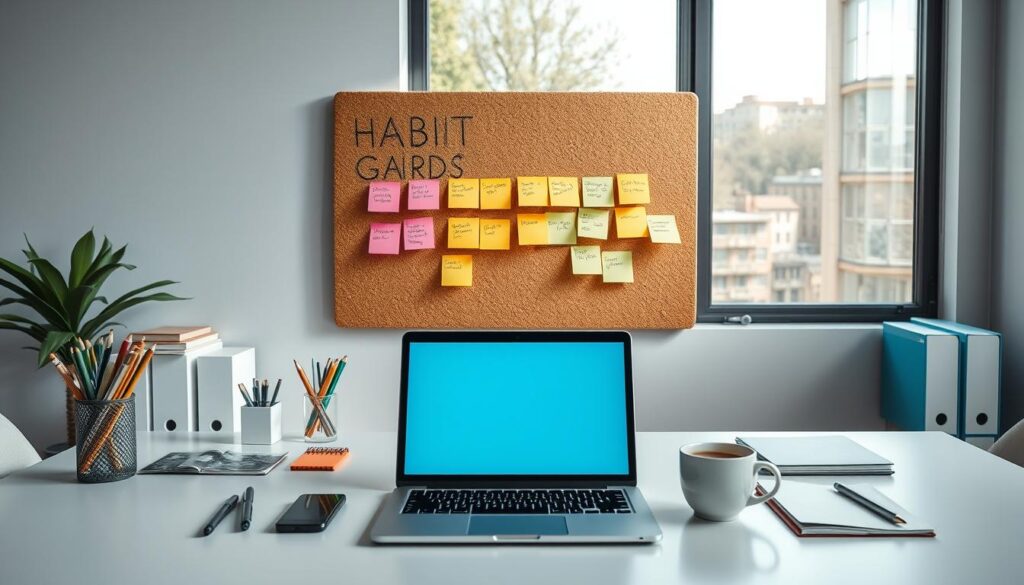
To stay motivated, track your progress and think about how far you’ve come. Use a habit tracker or journal to see your achievements.
Knowing the common challenges and how to stay motivated can help you succeed in habit stacking. You’ll enjoy a more organized and productive daily life.
Tools and Resources for Habit Stacking
To make habit stacking easy, you need the right tools. There are many resources out there. You can find the perfect ones to help you build your routine smoothly.
Apps That Can Help You Stack Habits
In today’s world, apps can help with almost anything, including habit stacking. Some top apps include:
- Habitica: A habit-tracking app that turns your to-do list into a game, making it fun to follow your routines.
- Loop Habit Tracker: An Android app that makes tracking your habits and activities simple.
- Streaks Workout: An iOS app that helps keep your workout routine consistent, perfect for stacking exercise habits.
These apps are great for tracking your progress and staying on track with your habit stacking goals.
Books and Articles for Further Reading
If you prefer books or want deeper insights, there are many great resources. Some top reads include:
- “The Power of Habit” by Charles Duhigg: A detailed guide on how habits work and how to change them.
- “Atomic Habits” by James Clear: A step-by-step guide on building good habits and breaking bad ones, focusing on small changes.
- Articles on Medium and Psychology Today that offer insights and strategies for effective habit stacking.
These resources can give you a deeper understanding of habit stacking and practical tips for using it.
Looking for products to support your habit stacking? You can find planners, journals, and trackers on Amazon. Some popular ones include:
- Passion Planner: A planner known for helping you organize your tasks and habits.
- Habit Tracker Journal: A journal made for tracking and keeping up with your daily habits.
These products can be great additions to your digital tools. They offer a hands-on way to connect with your habit stacking routine.
Real-Life Success Stories
Many people have found success with habit stacking. It has helped them build routines easily. They’ve seen big improvements in their well-being.

How Others Have Transformed Their Routines
Sarah had trouble with her evening routine. She started reading before bed, adding it to her tooth brushing habit. This helped her sleep better. “It became a natural part of my routine,” she said.
Mark also found success with habit stacking. He added a short meditation to his coffee-making habit. This simple change improved his mental clarity and reduced stress.
- Consistency is key: Everyone agrees that sticking to it is important.
- Start small: They began with easy habits to add to their routines.
- Be patient: Changing routines takes time, so patience is key.
Key Takeaways from Their Experiences
These stories show us a few important things. Habit stacking uses what we already do to add new habits. It makes it easier to start new habits. Adding self-care, like meditation or reading, also boosts our well-being.
“Habit stacking allowed me to build a more mindful morning routine, setting a positive tone for the rest of the day.” – Emily, habit stacking practitioner.
Learning from these stories can help us use habit stacking in our lives. It can make our routines more effortless and fulfilling.
Maintaining Long-Term Habit Stacks
As you keep building effortless routines, keeping up the pace is key. You’ve learned to stack habits and tackle obstacles. Now, focus on lasting success.
Tracking Progress
It’s important to check your progress often. This helps you see what’s working and what needs tweaking. Take time to think about your daily habits & routines.
Look for patterns and achievements that help your lifestyle changes.
Adapting for Continued Success
As you grow and your goals change, so should your routines. Be ready to tweak your habit stacks for new challenges and chances. This flexibility keeps you moving forward.
Stay true to your goals and be open to changes. This way, you can keep your long-term habit stacks strong. They will support your well-being and lead to lasting lifestyle changes.
FAQ
What is habit stacking, and how can it help me build better daily routines?
Habit stacking is a method to add new habits to ones you already have. It makes your daily routine more efficient. By using your current habits, you can make positive changes and improve your life.
How do I identify the habits I should stack?
First, track your daily habits to find the ones that work for you. Then, think about new habits you want to add. Choose habits that help you reach your goals.
What are some common pitfalls to avoid when implementing habit stacking?
Avoid adding too many new habits at once. Start small and build up. Also, don’t give up, even when it’s hard. Consistency is key.
How can I stay motivated to maintain my habit stack over time?
Celebrate your small victories. Don’t be too hard on yourself if you slip up. Having support and tracking your progress can keep you motivated.
Are there any tools or resources that can help me with habit stacking?
Yes, many apps, books, and resources are available. You can find a list of recommended products on Amazon to help you start.
How can I adjust my habit stack as my needs change over time?
Regularly check your progress and adjust your habits as needed. Life changes, and so should your habits. Be open to trying new things and making changes to keep succeeding.
Can habit stacking be used to improve my morning and evening routines?
Absolutely. Habit stacking can improve any part of your daily routine, including mornings and evenings. It helps create a balanced and fulfilling life.
How does habit stacking relate to self-care practices and overall well-being?
Habit stacking can greatly improve your well-being by helping you build healthy habits. It incorporates self-care into your daily life, boosting your mental and physical health.
Can I use habit stacking to improve my productivity and achieve my goals?
Yes, habit stacking is a powerful tool for boosting productivity and achieving goals. It helps you build habits that support your goals, making your daily routine more efficient.
Transform your home into a more peaceful and mindful sanctuary. Creating a Zen-inspired home environment is a core part of the “Live.Learn.Create” theme, focusing on peace, mindfulness, and a clutter-free space. Here is a curated list of Zen home items.
The Zen Essentials
These items are the building blocks of a calm, intentional living space.
- Candles & Scents:
- Scented Candles: Look for calming, natural scents like sandalwood, lavender, white tea, or bergamot. Choose candles made with soy or beeswax for a clean burn.
- Essential Oil Diffusers: A minimalist, sleek diffuser made of bamboo, ceramic, or glass.
- Essential Oil Sets: Look for blends specifically for relaxation, focus, or sleep.
- Incense & Burners: Natural incense sticks (e.g., palo santo, sage) with a simple, elegant burner.
The Zen Decor
This is about incorporating natural elements and simple design.
- Natural Materials:
- Wood or Bamboo Trays: For organizing candles, stones, or other small items.
- Ceramic Vases: Simple, unglazed ceramic vases in neutral colors like white, beige, or gray.
- Minimalist Art: Simple line drawings, abstract prints, or nature-inspired artwork.
- Hand-Carved Stone Coasters: Or other small stone sculptures.
- Textiles:
- Linen or Cotton Throws: A soft, neutral-colored throw blanket to add warmth.
- Jute or Sisal Rugs: These add natural texture and grounding to a space.
- Meditation Cushions (Zafu) & Mats (Zabuton): These provide comfort for meditation and add a serene touch to a room.
The Zen Ambiance
These items help create a peaceful sensory experience.
- Lighting:
- Himalayan Salt Lamps: These provide a warm, soft glow.
- Japanese-style Paper Lanterns: For a soft, diffused light source.
- Dimmable Smart Bulbs: To easily control the warmth and brightness of your lighting.
- Sound:
- Tabletop Water Fountains: The gentle sound of running water is incredibly calming.
- Wind Chimes: Made from natural materials like bamboo or metal for a soft sound.
- Bluetooth Speakers: Small, aesthetically pleasing speakers for playing ambient or meditation music.
- Nature:
- Bonsai Trees or Air Plants: Low-maintenance indoor plants that bring life and a touch of nature indoors.
- Zen Gardens: A small, tabletop sand garden with a rake and stones for a meditative ritual.
- Decorative Rocks & Pebbles: For bowls or as a decorative element.
Best Sellers https://amzn.to/3Vet1tI
New Releases https://amzn.to/4mwLjTi
Amazon Movers & Shakers https://amzn.to/4fPsZlP
Mindfulness Coloring Books https://amzn.to/4fQ0wMx
Personal Growth Coloring Books https://amzn.to/4lJeRf0
Health & Wellness https://amzn.to/4oRt24C
Zen Home Decor https://amzn.to/3VeA3i6
Zen Garden Decor https://amzn.to/4mXjT8D
Zen Garden https://amzn.to/3HQTVVB
- Mindfulness & Meditation:
- Physical Wellness:
- Habit & Productivity Tools:
- Books:
- Best-selling personal development books (Mindset, The 7 Habits of Highly Effective People, The Subtle Art of Not Giving a F*ck)
- Books on a variety of skills (coding, photography, writing.)
- Educational Gadgets:
- Smart pens that digitize notes (e.g., Rocketbook)
- Portable scanners for digitizing documents
- Laptops, tablets, and accessories
Create (Creativity, Innovation, Projects)
These products cater to your creative side, whether you are a artists, writer, or DIY enthusiasts.
- Creative Supplies:
- Adult coloring books or “paint-by-sticker” books
- Craft kits (e.g., candle-making, pottery, embroidery)
- Digital Creation Tools:
- General Inspiration & Making: